Where Culture Lives · Critical Observations

Critical Observations

Three cross-cutting observations drawn from the WCL research — patterns that recur across all six islands and shape how culture is practised, sustained and experienced in the Dutch Caribbean.

3 observations · 6 islands · 581 respondents
From the WCL final report · Chapter 4

What the research reveals

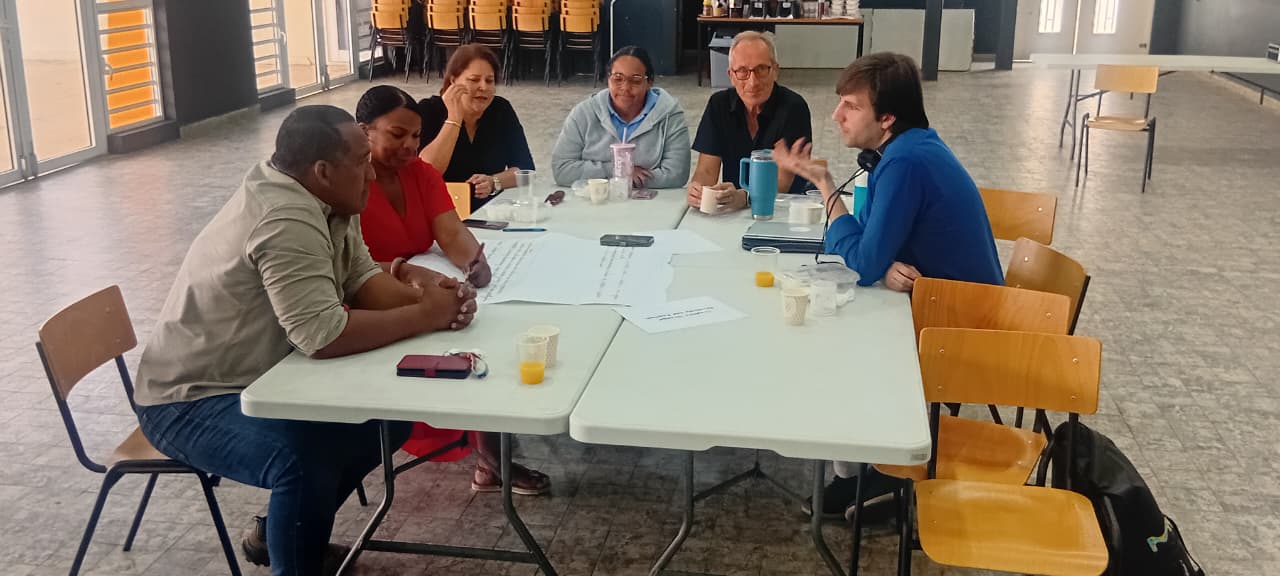
These observations are not recommendations — they are patterns that emerged consistently from both the survey data and the focus group conversations across Aruba, Bonaire, Curaçao, Sint Maarten, Sint Eustatius and Saba.

Observation 1 of 3

Culture as a living vibration

Across all six islands, culture is not experienced as a fixed institution or a managed sector — it is lived. It moves through communities in daily practice: in the music made at home, in the dances rehearsed before carnival, in the crafts taught across generations, in the stories shared at family gatherings. The WCL survey data confirms this: the most widely practised cultural activities are not formal or institutional but informal and participatory.

This vitality is not contingent on funding or policy. It exists despite structural gaps. Communities are generating culture continuously, and the vibration is strongest where informal networks — families, neighbourhoods, peer groups — carry the transmission. The challenge the research surfaces is not how to create cultural life, but how to sustain the conditions that allow it to keep vibrating without the weight of neglect, underfunding or administrative burden wearing it down.

Survey n=581 6 islands Informal practice Cultural transmission
Observation 2 of 3

It takes a village — jack of all trades

Cultural life across the ABCSSS islands is sustained largely through community resilience and grassroots leadership. The WCL research shows that practitioners — artists, educators, cultural organizers — routinely wear multiple hats. They create, teach, administrate, fundraise and advocate simultaneously, simply to keep cultural life going. This is not a choice but a structural reality: where institutions are thin, individuals fill the gaps.

What is often celebrated as resilience also reflects structural absence. At 55%, the share of respondents naming funding as a challenge on Sint Maarten is the highest of the six islands. Across the archipelago, the average sits at 42%. Bridging the knowledge and information gap — connecting practitioners to grant opportunities, administrative support, and professional development — is essential in order to support creatives in moving from survival to sustainability.

42% avg. funding challenge Sint Maarten 55% Grassroots resilience Structural support
Observation 3 of 3

Gimme room to dance

"Gimme room to dance" — a familiar expression within the Caribbean carnival space — becomes symbolic here. It reflects a plea to clear the way so people can be free to dance: to create, to teach, to organize culture on their own terms. Communities across the six islands are already doing the work. They are creating, teaching, organizing and transmitting culture, often with remarkably limited means.

What they increasingly demand is room: room to sustain culture, develop talent, safeguard heritage and build long-term cultural ecosystems. Yet as the survey results show, funding, infrastructure, venues, training opportunities and grant access remain uneven and often inaccessible — especially for smaller organizations and individual practitioners. The ask is not for charity but for structural conditions that allow culture to grow from within, rooted in community, on Caribbean terms.

Infrastructure Venues & access Caribbean terms Long-term ecosystems
Voices from the focus groups
"We need to work on our national theatre. You cannot call yourself a country without a theatre. The talent, artists, art are all here… but we do not have a properly equipped theatre to express, present and document our art."
— Open survey response · Curaçao · Papiamento
"At our dance theater we train about 250 students every year in ballet, jazz, African, contemporary and musical theater — with professional-level productions to give students real stage experience."
— Dance school director · Sint Maarten focus group
Participants called for greater institutional support, increased recognition of artists and informal cultural educators, and more sustainable investment in cultural infrastructure.
— Validation session synthesis · across six islands

Download the WCL report

The full findings, island-by-island data, focus group transcripts and recommendations are available in the final report.

Download the report (PDF) →